
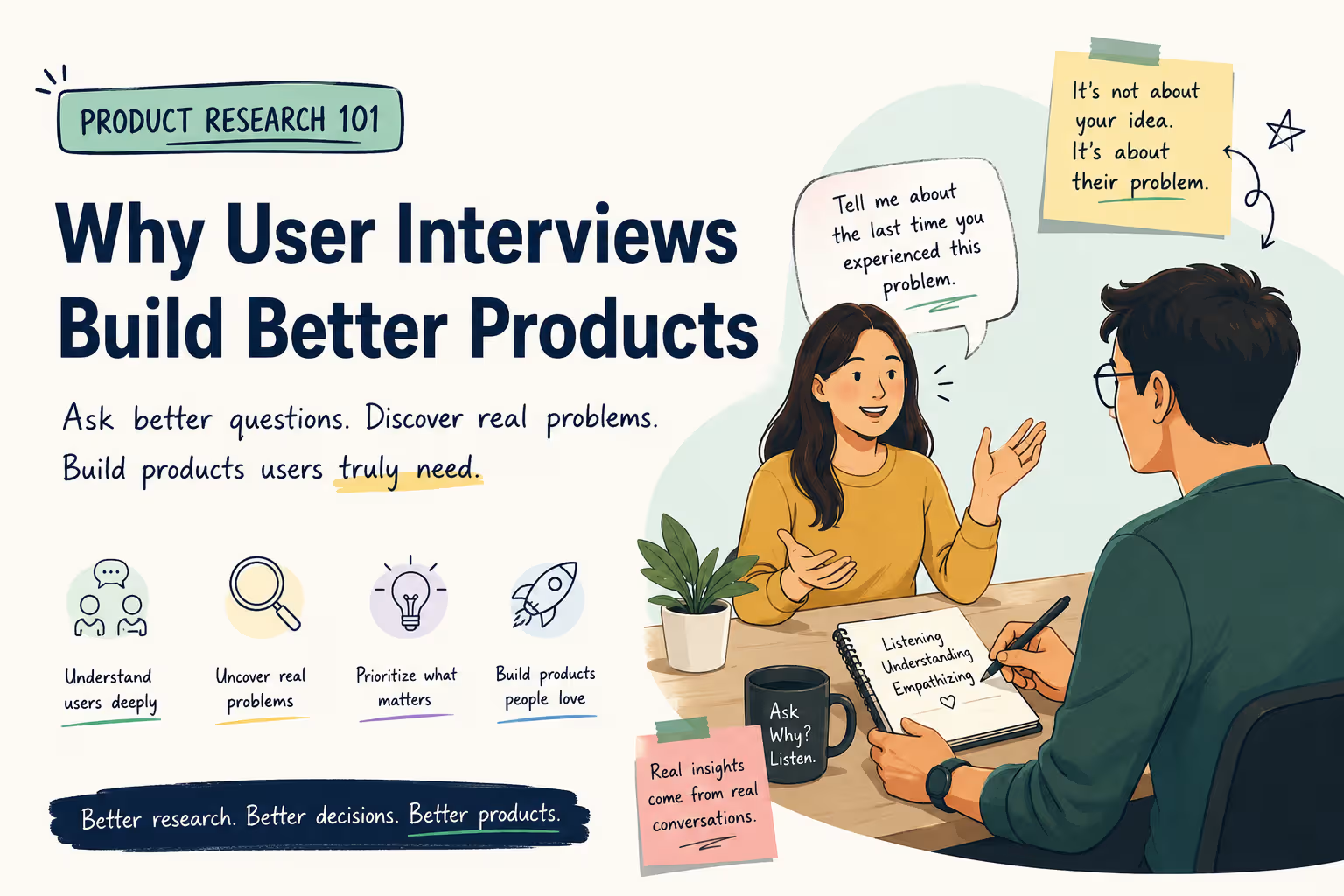

One of the biggest misconceptions about product management is that great products come from great ideas. In reality, successful products are built by deeply understanding users and solving problems that actually matter.
Early in my product journey, I often jumped straight into brainstorming solutions. I assumed I already knew what users wanted because I was familiar with the product or technology. Unfortunately, assumptions rarely survive contact with real users.
Instead of asking "Do you like this feature?", I learned to ask "Tell me about the last time you experienced this problem." That small shift completely changed the quality of insights I gathered.
In this article, I'll share what I've learned about user interviews and how aspiring Product Managers can conduct effective product research.
What is Product Research?
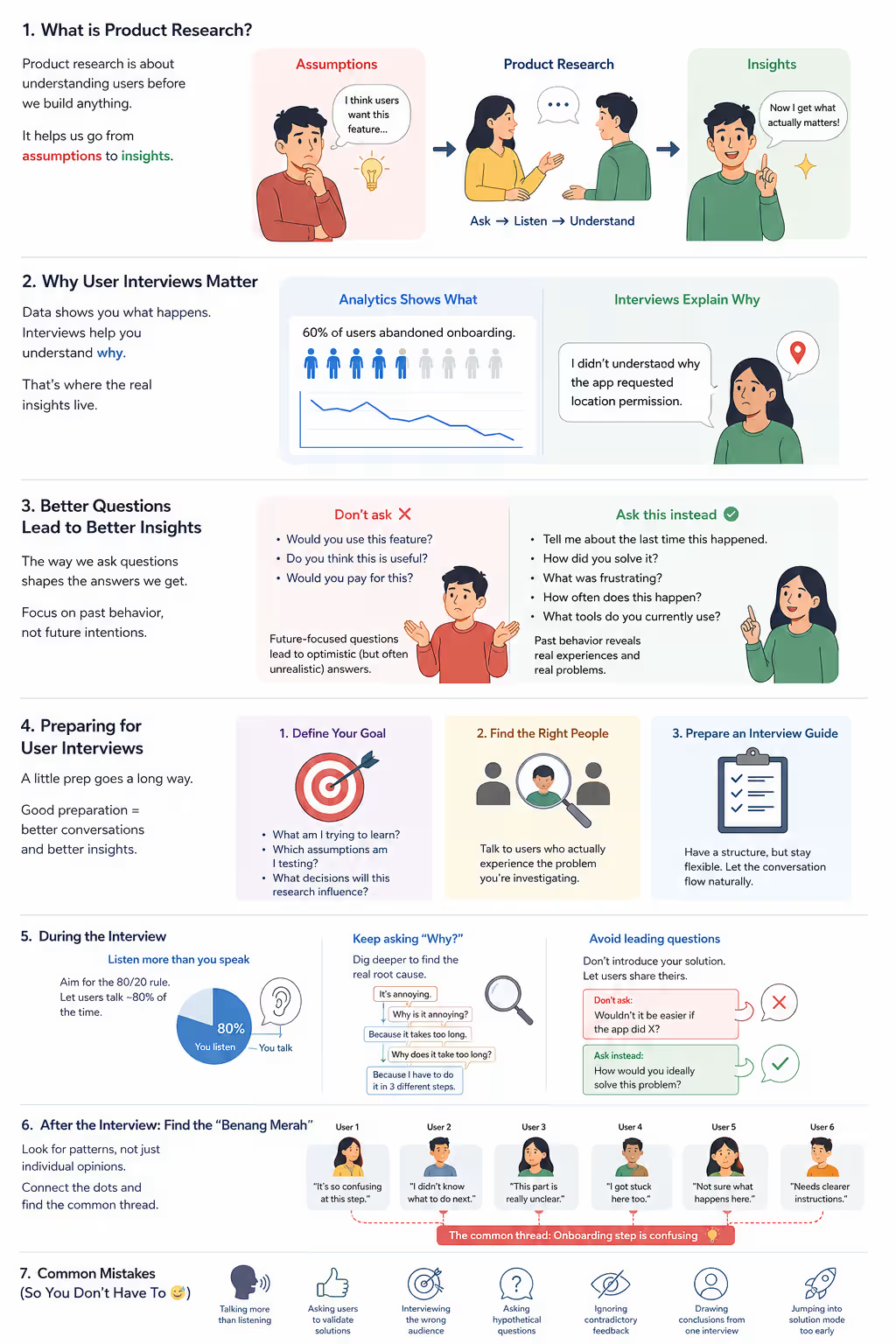
Product research is the process of understanding users, their problems, motivations, behaviors, and needs before making product decisions.
The goal isn't to validate our own ideas.
The goal is to discover the truth.
Good product research helps answer questions like:
- What problem are users actually trying to solve?
- How are they solving it today?
- What frustrates them?
- What matters most to them?
- Which problems are worth solving first?
Without research, product decisions become educated guesses. With research, they become evidence decisions.
Why User Interviews Matter
Among all research methods, user interviews are one of the most valuable.
Unlike analytics or surveys, interviews let you understand why users behave the way they do.
Analytics might show:
"60% of users abandoned onboarding."
An interview helps explain:
"I didn't understand why the app requested location permission."
That context is incredibly valuable.
Biggest Lesson: Don't Interview to Validate Your Idea
This was one of the hardest lessons for me.
When I first conducted interviews, I subconsciously wanted users to confirm my solution.
I'd ask questions like:
- Would you use this feature?
- Do you think this is useful?
- Would you pay for this?
These questions often produce overly optimistic answers.
Instead, experienced Product Managers focus on users' past behavior.
Better questions include:
- Tell me about the last time this happened.
- How did you solve it?
- What was frustrating?
- How often does this happen?
- What tools do you currently use?
Past behavior is usually a much stronger predictor than future intentions.
Preparing for User Interviews
A good interview starts long before the conversation begins.
1. Define Your Research Goal
Ask yourself:
- What am I trying to learn?
- Which assumptions am I testing?
- What decisions will this research influence?
Without a clear objective, interviews often become casual conversations with little actionable insight.
2. Identify the Right Participants
Not every user represents your target audience.
Recruit participants who actually experience the problem you're investigating.
For example, if you're building a budgeting app for young professionals, interviewing college students may not provide the most relevant insights.
3. Prepare an Interview Guide
An interview guide keeps conversations focused while allowing flexibility.
A simple structure could look like this:
Warm-up
- Tell me about yourself.
- What do you do?
Current Workflow
- Walk me through how you currently complete this task.
- What tools do you use?
Pain Points
- What's the most frustrating part?
- What takes the longest?
Closing
- If you could magically improve one thing, what would it be?
Notice that none of these questions suggest a solution.
That's intentional.
During the Interview
A few habits made a huge difference in my interviews.
Listen More Than You Speak
A good rule is the 80/20 principle.
Users should speak around 80% of the time.
Silence is okay.
Sometimes the best insights come after a few seconds of thinking.
Keep Asking "Why?"
If someone says:
"The process is annoying."
Don't stop there.
Ask:
- Why?
- Can you tell me more?
- What makes it frustrating?
Keep digging until you understand the root cause.
Avoid Leading Questions
Instead of:
❌ "Wouldn't it be easier if the app did X?"
Ask:
✅ "How would you ideally solve this problem?"
The first introduces your idea.
The second uncovers theirs.
What to Do After the Interview
Research doesn't end when the meeting finishes.
Immediately after each interview:
- Write down key observations.
- Highlight recurring pain points.
- Identify surprising behaviors.
- Group similar findings together. (I called it "Benang merah")
Patterns matter far more than individual opinions.
If five out of six participants mention the same frustration, you've likely discovered a meaningful opportunity.
Common Mistakes New Product Managers Make
Here are mistakes I've personally made and seen others make:
- Talking more than listening.
- Asking users to validate solutions.
- Interviewing the wrong audience.
- Asking hypothetical questions.
- Ignoring contradictory feedback.
- Drawing conclusions from only one interview.
- Jumping into solution mode too early.
Recognizing these mistakes early can save weeks of unnecessary development.
Final Thoughts
User interviews taught me that product management is less about having the best ideas and more about asking the right questions.
The most valuable insights rarely come from users telling you what feature they want. They come from understanding their everyday struggles, behaviors, and goals.
As aspiring Product Managers, our role isn't to assume, we investigate. We don't build features because they sound exciting; we build them because we've uncovered a real problem worth solving.
The next time you're tempted to brainstorm solutions immediately, pause for a moment.
Schedule a conversation with a user instead.
You might discover that the real problem is completely different from what you originally imagined and that's exactly what good product research is all about.